Showing posts with label james whale. Show all posts

Tuesday, 15 December 2015

Igor, pull the switch!

In the recent Victor Frankenstein with James McAvoy in the title role, we have seen Daniel
Radcliffe as his handsome but hunch backed assistant, Igor. To many, it seems that Frankenstein has ALWAYS been assisted by a hunchback called Igor. But in fact, it's one of those urban legends like Sherlock Holmes stating “Elementary my dear Watson” (not once does he utter these words in the original Canon) or Johnny Weissmuller's Tarzan saying "Me Tarzan you Jane” (he only says “Tarzan... Jane... Tarzan...”)

So no, there isn't a single trace of an Igor in Mary Shelley's novel, nor is there any character who could have inspired the deformed valet pulling switches in the popular imagery. No Igor either in any of the theater plays that have been staged throughout the 19th century. No Igor in the first film version of Frankenstein in 1910.

Could we date the creation of this character with the release of James Whale's Frankenstein in 1931? Everyone remembers Boris Karloff being persecuted by a hunchback holding a torch, played by Dwight Frye... Unfortunately, the guy isn't called Igor, but Fritz. Damn. In fact, Dwight Frye appeared in most of Universal Frankenstein films, as a different character each time, but he never played an Igor. J. Carrol Naish plays another hunchback in House of Frankenstein, but his character is called Daniel!

The first time a Frankenstein met an Ygor (with an Y) was in 1939 Son of Frankenstein, the third entry in the Universal saga. Played by none other than Bela Lugosi, this Ygor introduces himself to Wolf von Frankenstein (Basil Rathbone), and says he used to be his father's assistant – which is rather dubious since we haven't seen him in previous movies. Besides, he's not a hunchback at all, he simply has a broken neck due to his attempted hanging by the townspeople. Lugosi's Ygor returne in the sequel Ghost of Frankenstein, then lived on as the Monster's brain in Frankenstein meets the Wolf Man.

There was no character called Igor in the Frankenstein movies produced by Hammer Films, and the only occurrence that can be spotted in the 60s is the western schlock Jesse James meets Frankenstein's Daughter, where said daughter renames her creature Igor for unknown reasons.
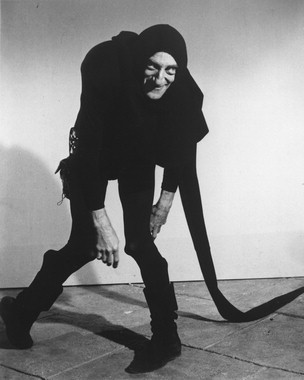
By the time Mel Brooks made his Young Frankenstein in 1973, the hunchback assistant Igor was a given in most people's minds, probably because of a confusion between Dwight Frye and Bela Lugosi's characters. However, Young Frankenstein's Igor played by Marty Feldman marks his real screen debut. Innumerable other Igors would follow, in movies such as Mistress Frankenstein, The Nightmare before Christmas, Frankenstein Italian Style, Return of the Killer Tomatoes, Van Helsing, Crazy Dracula Spring Break Weekend, Christmas at Draculas and even... wait for it... Daughter of Werebitch Meets Skankenstein.

In 2008, there was even a feature animated film starring Igor, with the voice talents of John Cusack as Igor and John Cleese as Dr Glickenstein. In this (dark) comedy, Igors are a race of slaves doomed to assist crazy scientists in their experiments. But our hero has higher ambitions!


There is no character called Igor in Sherlock Holmes vs Frankenstein.


Saturday, 2 May 2015

May 2d: St. Boris's Day

Today, we celebrate people with the name Boris. But isn't it ironic that the most famous Boris of all is actually called... William?! Boris Karloff, whom we all know for his portrayal of Frankenstein's monster in the first three Universal movies, was born William Henry Pratt in 1887, and there was nothing russian about him. A bit indian on his paternal grandmother's side, but no reason for him to choose Boris Karloff as his stage name.

Before he became an icon of horror, he was an intimidating supporting actor in stage plays and a truckload of silent films. He was already 32 when he first appeared on screen. Finding these early performances can be a bit tricky, but you should be able to find a copy of Tarzan and the Golden Lion (1927) somewhere.

In 1931, James Whale directed a lavish screen version of Frankenstein, which was not adapted from the book but from a successful stage play. The scientist was played by Colin Clive, but the creature was embodied by an mysterious uncredited actor, whose name was only revealed in the closing credits. Boris Karloff became a star overnight, and returned of course in The Bride of Frankenstein (1935), Son of Frankenstein with Basil Rathbone and Bela Lugosi (1939), House of Frankenstein (1944, where Karloff didn't play the monster but a Dr Gustav Niemann), but also played Fu Manchu, Mr Wong (a Fu Manchu ripoff), the Mummy Imhotep, various mad scientists and a bunch of villains who antagonize Dick Tracy and Charlie Chan.

In 1953, the golden age of black & white horror was almost over, and Karloff only played Dr Jekyll and Mr Hyde for laughs, opposite Abbott & Costello. In 1958, at a time where Hammer Films was taking over gothic horror, he played Baron Frankenstein himself in a weak movie called Frankenstein 1970, where he used body parts from a film crew to create his monster.

In the 60s, he became mostly a guest star in TV shows like I Spy and The Wild Wild West, but he also returned to Frankenstein in a weird little movie called Mad Monster Party, where he provided the voice of Baron Boris von Frankenstein (!)

Boris Karloff died in 1971, but he's very fondly remembered by classic horror fans, along with Bela Lugosi and Lon Chaney Jr. However, it seems that these three never shared the same bond as their successors Peter Cushing, Christopher Lee and Vincent Price.

Boris is the name of the dog in Sherlock Holmes vs Frankenstein, and I admit to it being a not-so-subtle wink to Karloff!


Tuesday, 8 July 2014

The early years

Sherlock Holmes. Frankenstein. Sherlock Holmes VERSUS Frankenstein. The film project has been floating around for some time now, and there have been questions lately about whether it's still alive. The answer is: it's been around for much longer than one might think, and yes, it's ALIVE... ALIIIIVE. But assembling a budget for a film is very comparable to piecing together a body from the right elements: you need to dig up coffins at night, with the risks that go with it. Risk of not having the strength or the tools to dig. Risk of being stopped in your endeavour. Risk of not finding the right body parts in the coffin you spent hours unearthing. Risk of having one part rot while you unearth the next. Finally, risk of not succeeding in breathing life in the body you manage to assemble in your secret lab.

But before you even start digging, you need a plan. And even before that, you need to be seized by the urge to devise this plan. Let me tell you the whole story, the path that led from watching films as a kid to trying to make them as an adult. It's a long and bumpy road, and it's still under construction.

1986-1989


It all begun in kindergarten. I had been watching Miyazake's cartoon Sherlock Hound on TV for some time, and I enjoyed it more than most other cartoons of that time (except Thundercats!), but nothing had prepared me for The Great Mouse Detective. I saw it in a theater when it first came out, which might have been for my 5th birthday – since the film was released in France in late November 1986, and my birthday is in early December. The setting (Victorian England!), the exciting music and the unforgettable characters (the evil Ratigan had an amazing song that ended with one of his henchmen being fed to a huge cat) stuck with me, to the point where I wanted to set up a show at school, where we would have recreated the streets of London in the hall, and disguised the children as mice and rats. It didn't go farther than a few talks with my parents because, let's face it, I didn't have the chops to stage a theater play at the age of 5.

Fast forward: this time I know it was a birthday, my 8th. I must have been a Sherlock Holmes geek by then, because my presents were a deerstalker hat and a VHS tape of The Sign of Four (the one with Ian Richardson). I was able to compare it to Granada's version of the story, which I had already watched countless times. I loved the Holmes series with Jeremy Brett,
8-year-old me
even though I found it extremely scary and disturbing at time (I remember The Greek Interpreter as being a source of nightmares). I probably didn't understand everything, but the character of Sherlock Holmes as played by Brett was one I could relate to – distant and centered on his own vision, yet keen on doing the right thing and on helping his fellow men, even when it meant ignoring the law. He also went into disguise on numerous occasions, which was one of my favourite hobbies at that time.


Less than three weeks after that birthday, Christmas came along. I must have had a number of presents, but there's only one I can remember to this day: a pocket edition of Mary Shelley's Frankenstein (a French translation of course, and one that might have been simplified a bit). The story was compelling, and much more complex than I thought it would be: the name Frankenstein was known to me from its presence in everyday's culture, as a generic speechless monster with a flat head, and I was surprised to learn that Frankenstein was actually the creator's name – and the creature was more of a man than a monster. The questions of identity and loneliness resonated in me at that time, and I remember being partial to the Creature, who had a revenge to take on a world who didn't understand him. Victor Frankenstein, in my eyes, was an irresponsible asshole who should have thought twice before giving life to a being he wasn't ready to care for. Growing up, I became more interested in Victor's character, who goes through a tough journey: driven by passion, he makes a mistake as a young man, practically a teenager, and then realizes that he will never be free from his mistake. Not until he dies. There are so many ways to interpret Frankenstein, as a story of fatherhood, creation, life, love and death, that you could read it every year and see a new side to it each time.

1991-1994


It was not until I was 10 that I saw my first Frankenstein film. It was of course the 1931 classic with Boris Karloff, and I finally met the flat-headed monster that I had been aware of before even reading the novel. I enjoyed the movie for what it was – a dry, expressionist version of the story that focused on a few aspects while discarding a lot of the book's elements for entertainment's sake. At that time, I felt it was oversimplifying the monster's story by making him speechless. Then a week later, I saw Bride of Frankenstein and although I loved that they introduced the blind violin player, I revised my idea that the Monster had to speak – Karloff chatting with Ernest Thesiger in a vault was too comedic for my serious 10-year-old self. Now I enjoy all of Universal's Frankenstein movies, and I get the humor and greatness in Bride – but the first entry still holds a special place in my heart.

In November 1994, my father took me to a theater play called La Nuit du Crime, where the audience had to sort out who the murderer was. It was sponsored by the newly created 'Société Sherlock Holmes de France', and my solving the case earned me a diploma that made me a “honorary member”. Maybe this is when it all started!..